AI for Exhibition Design: Concepts, Signage, and Visitor Journeys.
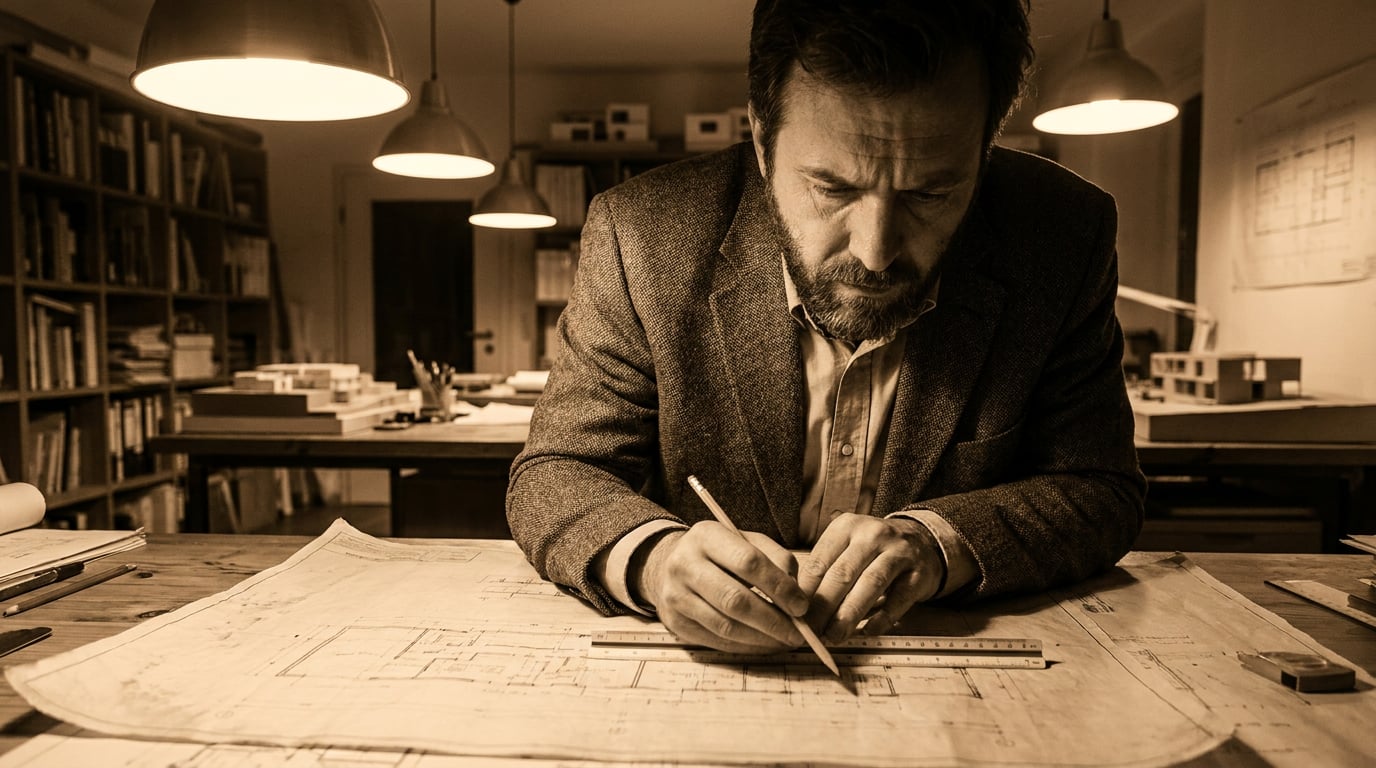
Exhibition designers are using Stensyl to move from brief to spatial concept faster, without sacrificing the research depth clients expect.
Why Exhibition Design Is a Strong Fit for AI Workflows

Exhibition design is one of the most compressed briefs in the creative industry. In a single commission, a team must resolve spatial planning, graphic identity, wayfinding logic, narrative structure, and fabrication constraints, often simultaneously and usually before the budget is confirmed. The pitch phase is where the pressure concentrates: clients expect rendered zone concepts, signage systems, and visitor flow diagrams as a condition of engagement, not a reward for winning the project.
That pressure is precisely why AI tools fit exhibition workflows so well. The early stages of an exhibition project are high-volume and high-iteration. Spatial moodboards, label copy drafts, signage hierarchy tests, and concept perspectives all need to exist before a single measured drawing is produced. AI handles that iteration well. The discipline-specific judgement, knowing which spatial sequence will work for a specific audience in a specific venue, still belongs to the designer.
The sector is already moving. ExpoBooth.ai launched publicly in early 2025 as an AI-driven booth design service, promising concept renders, cinematic walkthroughs, and annotated drawings in under ten seconds. OCTANORM, a major modular stand system vendor, offers an AI booth designer where users enter ideas and receive rendered designs almost immediately. These are vendor-reported claims and have not been independently validated, but they signal where the market is heading: towards AI as a standard part of the pitch and concepting toolkit, not an experimental add-on.
Stensyl's multi-surface structure maps naturally onto how an exhibition project actually runs. Research handles context gathering on venues, precedents, and audiences. Write handles narrative structure and label copy. Generate and Graphics produce spatial visuals and signage concepts. Moodboards curate reference. Canvas chains these steps together without manual file transfer between tools. The practical advantage is not any single capability but the fact that all of it lives inside one project workspace, with a shared credit system and a single creative record from brief intake to pitch delivery.
Exhibition design's pitch phase demands high volumes of visual and written output before a budget exists. AI absorbs that early-stage load, and a unified platform keeps every output connected to the same brief.
Building the Brief Foundation with Research and Write

Before a single spatial concept is generated, the brief needs a factual foundation. Use the Research surface (backed by Perplexity's web-connected model) to gather context on the exhibition theme, the client's sector, comparable shows, venue constraints, and any regulatory signage requirements for the space type. For a science museum commission, that might mean sourcing precedents from comparable institutions, checking accessibility legislation for signage height and contrast, and pulling together audience research on the likely visitor profile. For a trade show booth, it means understanding the client's competitive landscape and the typical visual noise of the hall environment they will be working against.
Feed that research directly into a Write session to draft the narrative framework: the story arc the visitor will move through, the tone of the space, and the key messages each zone needs to land. A well-structured narrative brief at this stage becomes the creative anchor for every generation step that follows. Without it, spatial concepts and signage drafts drift in different directions and produce the back-and-forth revision cycles that kill exhibition timelines.
The Write surface's model picker lets you match the model to the specific task. Claude Sonnet 4.6 (available on the Pro tier) handles long-form spatial narrative well: multi-zone story arcs, curatorial statements, visitor persona descriptions, and accessibility variants of interpretive labels all benefit from its reasoning depth and ability to hold a consistent brand voice across a long document. For structured, repetitive copy such as panel text templates, zone description headers, and wayfinding label sets, GPT-5.5 (available from the Starter tier) produces consistent output faster and is well-suited to the kind of systematic copy an exhibition pitch requires at scale.
A practical example: a science museum brief might produce a five-zone narrative document in a single Write session. Each zone gets a tone note ("archival and precise" versus "exploratory and participatory"), a three-sentence visitor experience description, and a list of key messages the space needs to communicate. That document becomes the brief that every subsequent Generate, Graphics, and Moodboard session works from. The exhibit designer refines the logic and the domain knowledge; Write handles the drafting volume.
A well-drafted narrative brief is not a nice-to-have. It is the document that keeps spatial concepts, signage copy, and visitor journey visuals coherent when three people are working the same pitch simultaneously.
The UNICHE project, an EU-funded initiative that launched expert surveys on AI in experience and exhibition design in 2024 and 2025, specifically flags the reshaping of curation and visitor experience workflows as a key research area. That institutional interest confirms what practice is already showing: LLMs are becoming standard tools for drafting interpretive copy and structuring multi-zone narratives, with human expertise applied at the level of accuracy, tone, and final editorial judgement.
Spatial Concept Visuals: From Moodboards to Generated Imagery
Visual concepting in exhibition design has always been reference-intensive. A designer building a mood for a dark archival zone needs material references, lighting precedents, typographic registers, and comparable installations before a concept sketch makes sense. Sourcing that manually from stock libraries and Pinterest takes hours. Moodboards on Stensyl accelerates that curation: assemble visual reference for each zone quickly, giving the generative phase a controlled direction rather than an open-ended prompt.
From there, move to Generate for spatial concept imagery. Interior perspectives, lighting scenarios, material explorations, and view-from-entry shots all respond well to prompts that reference zone function, visitor density, and the narrative tone established in Write. A prompt grounded in "low-ambient archival lighting, floor-to-ceiling print panels, sparse visitor density, a sense of focused quiet" produces a meaningfully different result from a generic "exhibition space" request, and that specificity comes directly from the narrative brief built in the previous stage.
Signage system concepts are a natural fit for the Graphics surface. Test typeface pairings, wayfinding icon families, and colour system variants without opening a separate layout application. The speed advantage is significant during the pitch phase: generating twelve colour contrast tests for a wayfinding system takes minutes, not a morning. Ideogram 2.0, widely used in the industry for its stronger typographic rendering compared with earlier image generation models, demonstrates that text-accurate signage mockups are increasingly viable from AI tools. Stensyl's Graphics surface addresses the same need within the platform workflow.
For teams who want to chain these steps without manual copy-pasting, Canvas offers a node-based workflow where zone descriptions from a Write document feed directly into image generation nodes. A product design retrospective exhibition might generate ten spatial mood images per zone in the time it previously took to source two usable reference images from a stock library. The gain is not quality substitution but iteration volume: more directions explored, more quickly, before the team commits to a spatial concept.
Moodboards set the direction; Generate builds the visual evidence. Running both inside one project means your concept images are always referenced back to the same brief, not assembled from disconnected sources.
Visitor Journey Mockups and Wayfinding Logic

Visitor journey work sits at the intersection of spatial design and narrative. It is also the area where clients most often struggle to engage with conventional deliverables. Floor plans and section drawings communicate accurately to designers and project managers. They rarely communicate pacing, atmosphere, or emotional tone to a marketing director or a board-level sponsor who needs to approve a budget.
Use Write with Claude Sonnet 4.6 to map the journey as a structured document first: entry point, dwell zones, transition moments, exit, with estimated time-on-floor and decision points at each stage. For a travelling trade exhibition targeting three distinct visitor profiles, trade buyer, press, and general public, the narrative logic of each route differs meaningfully. Write handles the structural drafting; the exhibition designer applies the spatial and experiential knowledge that makes the route credible.
When you are unsure which generation approach best serves a specific mockup need, Ray (Stensyl's creative-decision assistant) is worth consulting. Describe the wayfinding challenge: a three-route junction where a heritage exhibition needs to direct wheelchair users, families, and solo adults simultaneously. Ray will suggest the most appropriate Stensyl surface and model for producing the mockup, whether that is a Generate perspective, a Graphics wayfinding panel, or a Storyboards sequence showing the transition between zones.
Visitor journey panel mockups are most effective when they combine the zone descriptions from Write with the signage copy drafted at the same time, producing visual representations of how information will actually appear to a visitor standing at each transition point. This is where the exhibition pitch becomes tangible for clients who do not read drawings: they see the panel, in context, at eye level, with real copy and real hierarchy.
For exhibitions with multiple routes or accessibility variants, Canvas supports a branched node workflow. One input prompt branches into parallel generation paths for each route type, producing comparable visuals in a single session. A trade exhibition brief requiring parallel journey maps for three visitor profiles can generate all three simultaneously rather than sequentially, which matters when pitch timelines are measured in days.
Genesis Exhibits reports using a custom GPT-based tool, their "Trade Show Maestro," as a client-facing instrument to clarify spatial and content requirements before design begins. They cite better first-round alignment and fewer revisions. The underlying principle translates directly to Stensyl's Research and Write pairing: structured thinking before visual generation produces more focused pitches.
Signage Systems: From Concept to Client-Ready Mockups
Signage is one of the most time-consuming deliverables in an exhibition pitch. Clients want to see typographic hierarchy, legibility across distances, colour contrast, tone of voice, and environmental context all at once, often before the interpretive content is finalised. Building that from scratch in a layout application for every pitch is expensive. AI-assisted signage development changes the economics.
Start in Write with GPT-5.5 (Starter tier) to generate placeholder panel copy at scale. A heritage exhibition might need twelve distinct panel types across four zones: title panels, interpretive text, object captions, wayfinding labels, donor recognition, and accessibility variants. GPT-5.5 produces structured, consistent copy across a large panel set quickly, maintaining tone and hierarchy across the full set. The exhibition designer reviews and edits for accuracy and voice; the model handles the volume drafting.
Take that copy into Graphics to generate the signage visual system. Test colour contrast ratios, typeface scale at typical viewing distances, and layout hierarchy in context. This is faster than building every panel variant in InDesign or Illustrator from scratch, and it produces client-facing visuals that communicate the system clearly even at an early stage. Adobe Firefly's integration into Illustrator and Canva's Magic Media show the direction the industry is moving: AI signage mockup generation is increasingly embedded inside layout tools. Stensyl's Graphics surface offers the same capability within the broader project workflow.
For the pitch deck, the most persuasive signage deliverable is environmental: the panel in context, at human scale, in the actual lighting and spatial atmosphere of the zone. Generate produces those environmental mockups. A wayfinding totem at the entrance. A donor wall treatment under directional spotlighting. A backlit interpretive panel in a dark archival zone. These images move clients from in-principle approval to committed sign-off in a way that isolated graphic comps rarely do.
The combination of Write for copy volume, Graphics for the visual system, and Generate for environmental context is the fastest route from a blank brief to a complete signage pitch deck, without building every panel manually.
A heritage exhibition brief illustrates the workflow concretely. Write drafts all twelve panel type templates in one session. Graphics produces the visual system with two or three typeface and colour variants. Generate places three key panels, the entrance title, a mid-journey interpretive panel, and the exit reflection panel, into environmental renders for the pitch deck. The full signage story is told in one session rather than two days of manual production.
Organising Exhibition Projects Across the Platform
Exhibition commissions accumulate material quickly. Research documents, narrative briefs, spatial moodboards, generated concept images, signage drafts, visitor journey maps, and pitch deck assets all need to live somewhere coherent, both for the team working the project and for the client relationship that may span months from initial brief to installation.
Projects on Stensyl give exhibition designers a single workspace per commission. Brand identity assets, research documents, generated visuals, and narrative copy all live together rather than scattered across cloud folders, email threads, and disconnected subscriptions. For larger exhibition studios where a spatial designer, a graphic designer, and a copywriter are working the same brief simultaneously, team-shared workspaces in Projects provide the structure that prevents conflicting output versions and lost context.
Credit awareness matters when running multiple exhibition pitches in parallel. The table below maps Stensyl's pricing tiers to typical exhibition studio workloads.
| Tier | Price | Credits/month | Concurrent Generations | Best Fit |
|---|---|---|---|---|
| Starter | £22/mo | 2,500 | 1 | Freelance exhibition designers working a single active pitch |
| Pro | £42/mo | 6,000 | 2 | Single-project studio workflows with multiple active surfaces |
| Studio | £84/mo | 12,500 | 4 | Studios running two or more exhibition pitches simultaneously |
The Studio tier's four concurrent generations matter in practice. An exhibition studio running a museum pitch and a trade show pitch simultaneously can generate spatial concept imagery for one commission while the signage system for the other is being produced. Sequential generation on a lower tier works; concurrent generation changes the pace of a pitch-heavy workflow.
Storyboards offers a use that exhibition designers may not immediately consider. Treat each zone transition as a "scene" and generate a board that communicates pacing and atmosphere sequentially. A client who cannot read a floor plan can almost always follow a storyboard. Entry orientation, discovery zone, archival depth, making space, exit reflection: five scenes, five frames, one coherent visitor experience story. That document is often more effective in a client presentation than any plan or section.
The practical approach to an exhibition commission on Stensyl: open a Project at brief intake, use Research to build the factual foundation, Write to draft the narrative architecture, Moodboards to anchor the visual direction, Generate and Graphics for spatial and signage concepts, Canvas for chained workflows where zone descriptions feed directly into visual generation, and Storyboards for the client-facing visitor journey sequence. Every creative decision is logged in the same workspace. The pitch deck is assembled from assets that were always part of the same brief, not reconstructed from five separate tools at the last moment.
Exhibition design demands that a single project team think spatially, graphically, narratively, and operationally at the same time. The teams who will pitch most effectively are those who spend the least time on volume production and the most time on the domain judgement that cannot be generated: the spatial sequence that will actually work for that audience, in that venue, on that subject. AI handles the iteration; the designer handles the decisions. Keep both inside one workspace and the distinction stays clear.
Keep reading.

Try Stensyl for yourself
Image, video, 3D, chat, and document drafting. Every AI model, one studio. Plans from $11/month.