Ideogram v3 vs Recraft v3 for Graphic Design: 2026 Typography Showdown.
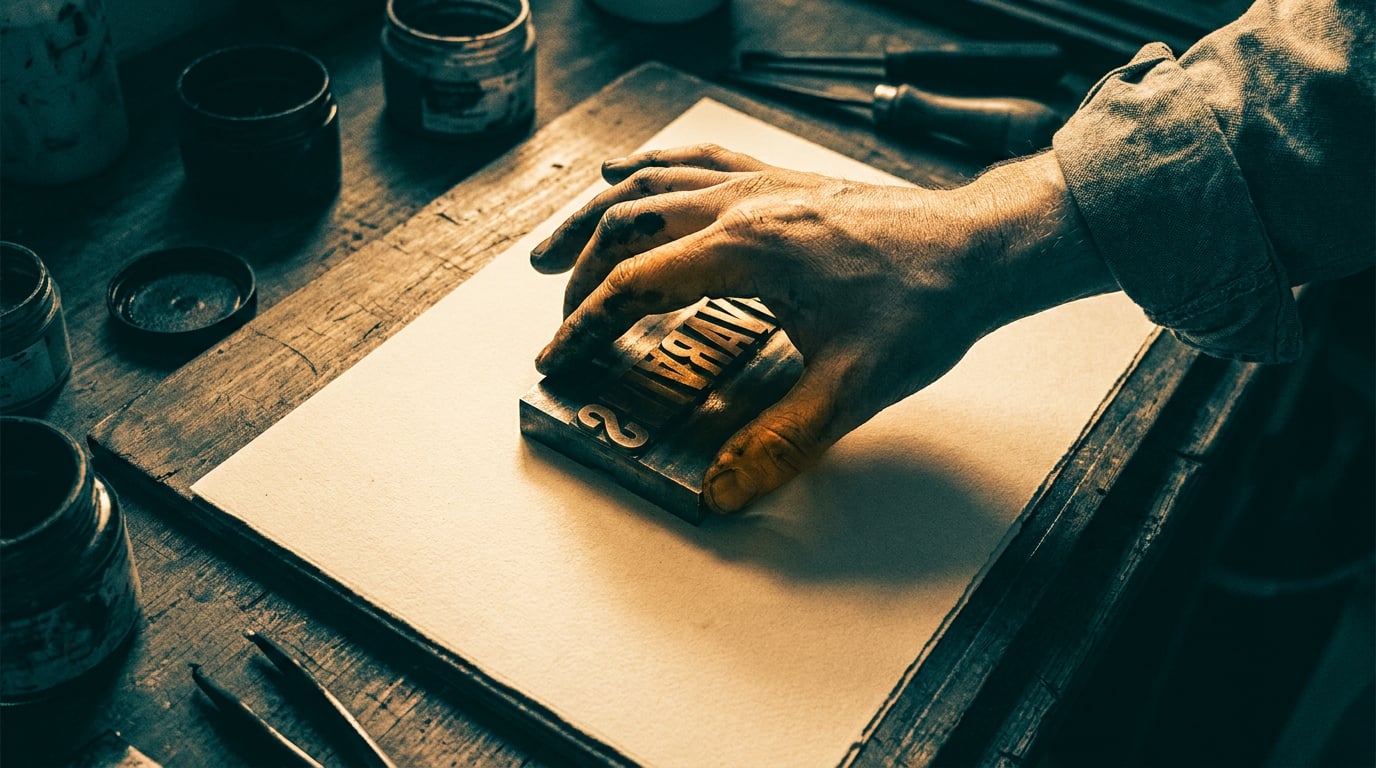
Two models claim the top spot for AI typography in 2026. Here is how Ideogram v3 and Recraft v3 actually perform under real graphic design conditions.
What Each Model Is Actually Built For

Ideogram v3 and Recraft v3 solve different problems. Treating them as interchangeable alternatives wastes both of them.
Ideogram v3 was built with a strong emphasis on legible, stylistically rich text embedded inside complex visual compositions. Its training makes it the more capable model when the brief calls for expressive letterforms: poster art, typographic illustration, packaging hero graphics, editorial covers. Type, in Ideogram's architecture, is part of a visual mood. It renders with atmosphere.
Recraft v3 takes the opposite approach. Released in October 2024 and trained from scratch for design workflows, it treats type as a precise design element. Its vector-first architecture prioritises clean, scalable output. That makes it the stronger default for brand identity work, icon systems, wayfinding graphics, and any deliverable that needs to survive the journey from screen to print without degrading.
The clearest way to frame the distinction: Ideogram asks "what should this type feel like?" and Recraft asks "what should this type do?" Both are valid questions. They just belong at different stages of the design process.
Before you generate a single image, the question worth asking is not which model is better. It is which model is right for this specific output.
Stensyl's Ray assistant on the platform is useful here. Describe your brief and Ray will surface the relevant model distinction based on your stated output format, pointing you toward Recraft for production vector work or Ideogram for expressive exploration, without the trial-and-error cost of running both and comparing results manually.
Typographic Accuracy: Where Each Model Holds and Where It Breaks

Independent tests from early 2026 put Ideogram v3 at roughly 75% consistency on short logo-style text such as a two-word brand name like "Ember Roast", which already puts it ahead of most competing models at the same task. But that figure drops as copy length increases. Dense layouts, small point sizes, ingredient-label quantities of text: these are where Ideogram's accuracy degrades noticeably. The model was not built for body copy generation.
Recraft v3 maintains character consistency across longer copy blocks. When exact spelling is non-negotiable, such as a client's brand name, a product SKU on a packaging mockup, or a wayfinding sign at an exhibition stand, Recraft is significantly more reliable. Its vendor claims image generation with text of any size and length, which independent sources have not yet fully verified, but production users in graphic design forums consistently report it as the stronger choice for precise, repeatable type.
Kerning and spacing behaviour also differs. Recraft produces tighter optical spacing by default, which reads as professional on corporate stationery, brand identity decks, and UI mockups. Ideogram leans toward stylistic looseness that suits a gig poster or album cover but would look unfinished on a product label or a retail signage system.
A six-word poster headline: Ideogram wins. A twelve-word tagline on a social carousel: Recraft wins. Neither model is flawless at both, which is exactly why a two-model habit beats a one-model default.
Here is a practical stress test worth running before committing to either model for a project. Take a short, expressive display phrase and a longer, exact-copy string. Generate both in both models. The results will show you the gap faster than any benchmark.
| Output Type | Ideogram v3 | Recraft v3 |
|---|---|---|
| Short headline / display type | Excellent | Good |
| Long tagline / body copy | Degrades past ~6 words | Consistent |
| Brand name / logo text | 75% consistency (independent tests) | Higher consistency, scalable |
| Small-size type / dense layout | Struggles | More reliable |
| Kerning / spacing character | Stylistically loose | Optically tighter |
The Graphics surface on Stensyl is the right environment to run this kind of comparison. Both models are available within the same session, outputs stay organised by project, and you are not managing separate browser tabs and separate accounts.
Stylistic Range: Expressive Type vs Production-Ready Type
Ideogram v3's stylistic range is genuinely broad. Art Nouveau flourishes, brutalist slab serifs, retro vernacular sign-painting, graffiti letterforms, hand-lettered script: all of these render convincingly from a well-constructed prompt. For a graphic designer building a campaign concept, an art director exploring a visual territory for a new product launch, or a content creator working on album artwork, that expressive breadth is a real asset.
Recraft v3's strength is different and arguably more commercially valuable in sustained project work. Generate a wordmark, a subheading style, and a caption treatment in the same prompt session, and the visual language holds across all three. That consistency is what brand identity projects require. A standalone hero image with beautiful type is not useful if the type character changes every time you run the model.
There is a useful crossover point for motion designers and exhibition designers. Recraft's consistent geometry makes it easier to carry a type treatment from a static graphic into a motion title sequence or a large-format exhibition panel system. When the letterforms are structurally predictable across generations, the manual correction work in After Effects or a large-format print prep file is significantly reduced.
Ideogram v3 is the right model for one-off campaign artwork where personality matters most. Recraft v3 is the right model for design systems where consistency is the deliverable.
One limitation both models share: neither handles complex custom ligatures or true variable-font behaviour. For those requirements, AI generation is still a starting point that feeds into a manual type refinement stage in Illustrator, Glyphs, or a comparable vector application. The models are faster than starting from a blank artboard, but they are not replacing type design at that level of specificity.
Vector Output and Production Handoff

This is the section where Recraft v3 separates itself in a professional context. Recraft produces SVG-compatible output. That means the file can move directly into a vector editing workflow with minimal cleanup. For a graphic designer handing off a logo to a print supplier, an exhibition designer preparing large-format panels for a fabricator, or an automotive designer working on decal and livery concepts, the ability to deliver a scalable vector file without autotracing a raster image is not a minor convenience. It is a production requirement.
Ideogram v3 outputs raster images. For any deliverable where type needs to be production-ready at scale, that creates additional work. Type elements need to be redrawn in a vector application or autotraced, which introduces cleanup work and erodes the speed benefit of generation in the first place. Recraft also supports TIFF, PDF, and CMYK export at 300 DPI, which covers most professional print specifications without additional conversion steps.
Recraft v3's SVG output is the single most important capability difference between these two models for graphic designers working in a production context. Raster generation is fast; scalable vector handoff is professional.
A practical workflow that uses both models effectively: use Recraft v3 to establish the production-ready type lockup that will go to print or fabrication. Then use Ideogram v3 to explore expressive variations and mood directions in the same project before you commit to a final direction. The exploration phase benefits from Ideogram's range; the production phase benefits from Recraft's precision.
The Graphics surface on Stensyl is built for this kind of workflow. Vector and graphic design generation, outputs organised by project, both models accessible without switching platforms. That structure matters when you are moving between exploration and production within the same working session.
Prompt Strategy: Getting Reliable Type from Both Models
Ideogram v3 responds well to style-referencing language. Name a typographic era, a design movement, or a visual texture alongside the text string. "1970s Italian film poster, condensed bold italic, warm grain texture, text reads 'Scala'" will outperform "retro poster with text." The model has absorbed enough visual history to respond meaningfully to specific references. Vague prompts produce vague letterforms.
Recraft v3 rewards precision over poetry. Specify font category rather than mood: geometric sans, humanist serif, condensed display. Add weight and intended use. "Geometric sans-serif, medium weight, wordmark for a sustainable packaging brand, text reads 'Forme'" is more reliable than "clean modern logo." Recraft's training is oriented toward design function, so functional language prompts more consistent outputs.
One technique that improves accuracy in both models: quote the exact text string inside your prompt using quotation marks. Both models show better fidelity to quoted strings, but Recraft is more consistent in reproducing quoted strings verbatim across multiple generations. For graphic designers working on a logo concept where the client's brand name must be exact, this is worth building into every prompt from the start.
A useful two-stage process for logo development specifically:
- Generate five directional explorations in Ideogram v3. Use style-referencing language. The goal is visual territory, not final execution. Let the model's expressive range work in your favour.
- Take the chosen direction into Recraft v3 and translate the mood references into precise specifications: font category, weight, spacing intent, output format. Generate the production-quality execution from there.
Stensyl's Ray assistant adds a useful layer before the generation stage. Describe your brief and the intended output format, and Ray will flag when your prompt is likely to produce illegible type, or steer you toward the model better matched to what you have described. It is faster than running a bad generation, reviewing it, and rewriting the prompt from scratch.
Which Model Earns Its Place in a Graphic Design Workflow
Ideogram v3 is the stronger exploration tool. It is fast, visually rich, and well suited to moodboarding type directions, generating campaign concepts, and presenting options to clients before committing to a single visual language. Its Quality tier produces the highest fidelity output when you need a polished exploration rather than a rough direction check. For a marketing team building a social campaign concept, or a content designer generating expressive artwork for a music release, Ideogram's range is the right tool.
Recraft v3 is the stronger production tool. Consistent output, SVG capability, precise enough for brand identity, packaging, and any deliverable where typographic accuracy is a professional requirement. For a graphic designer delivering a logo system to a client, or an exhibition designer handing off large-format type to a fabricator, Recraft's architecture matches the stakes of the work.
The most efficient workflow is not either-or. Use Ideogram v3 in the early stages via the Graphics or Generate surfaces on Stensyl, then move to Recraft v3 for the refinement and handoff stage within the same project. Both models are available under one credit system, which means the workflow shift costs a project decision, not a platform switch.
| Workflow Stage | Recommended Model | Best For |
|---|---|---|
| Exploration / moodboarding | Ideogram v3 | Campaign concepts, type direction, client options |
| Logo / wordmark development | Recraft v3 | Scalable output, consistent style, brand systems |
| Poster and expressive artwork | Ideogram v3 | Social content, album art, editorial graphics |
| Print and fabrication handoff | Recraft v3 | SVG, CMYK, large-format, packaging |
| Exhibition / wayfinding type | Recraft v3 | Consistent geometry across panel systems |
On Stensyl, a Pro plan at £42 per month gives 6,000 credits and two concurrent generations. That is enough throughput to run iterative type explorations across both models in a single working session: Ideogram v3 for directional range, Recraft v3 for production precision, neither requiring a separate subscription or a second tab.
The real advantage is not picking a winner between these two models. It is knowing precisely which one to reach for at each stage of the brief. Ideogram v3 for the territory. Recraft v3 for the execution. Both available without friction, inside the same project.
Keep reading.

Try Stensyl for yourself
Image, video, 3D, chat, and document drafting. Every AI model, one studio. Plans from £10/month.